

PhD Applicant
Gabrielle N. Erwin
Advancing regenerative medicine and space biology through plant science and biomaterials.


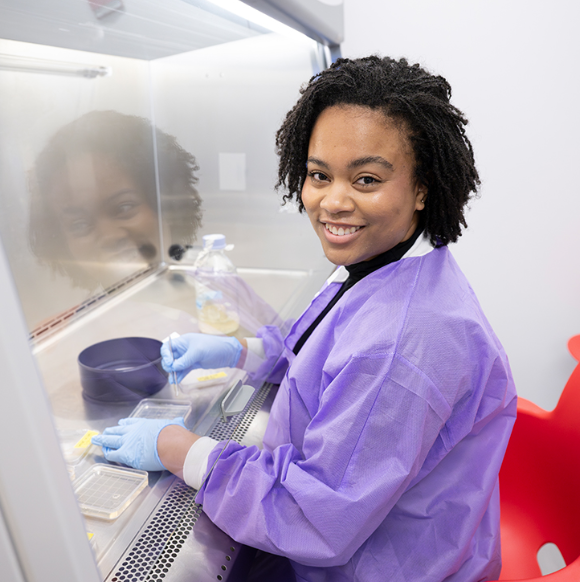
Advancing research at the intersection of astrobotany, biotechnology, and the cosmos.
Gabrielle N. Erwin is a scientist in training driven by her interest in how living systems not only adapt and heal, but also thrive where life is not expected. Gabrielle’s current research focuses on astrobotany and applications of regenerative medicine in space biology. With a propensity for creativity and an unbridled curiosity, Gabrielle aims to expand what is possible beyond Earth while advancing solutions that improve life here at home.
This site highlights her path, research contributions, and the collaborations guiding her toward a career at the intersection of astrobotany, regenerative biotechnology, and space medicine.


Explore Research
Current research at the intersection of regenerative medicine, plant biology, and space environments.
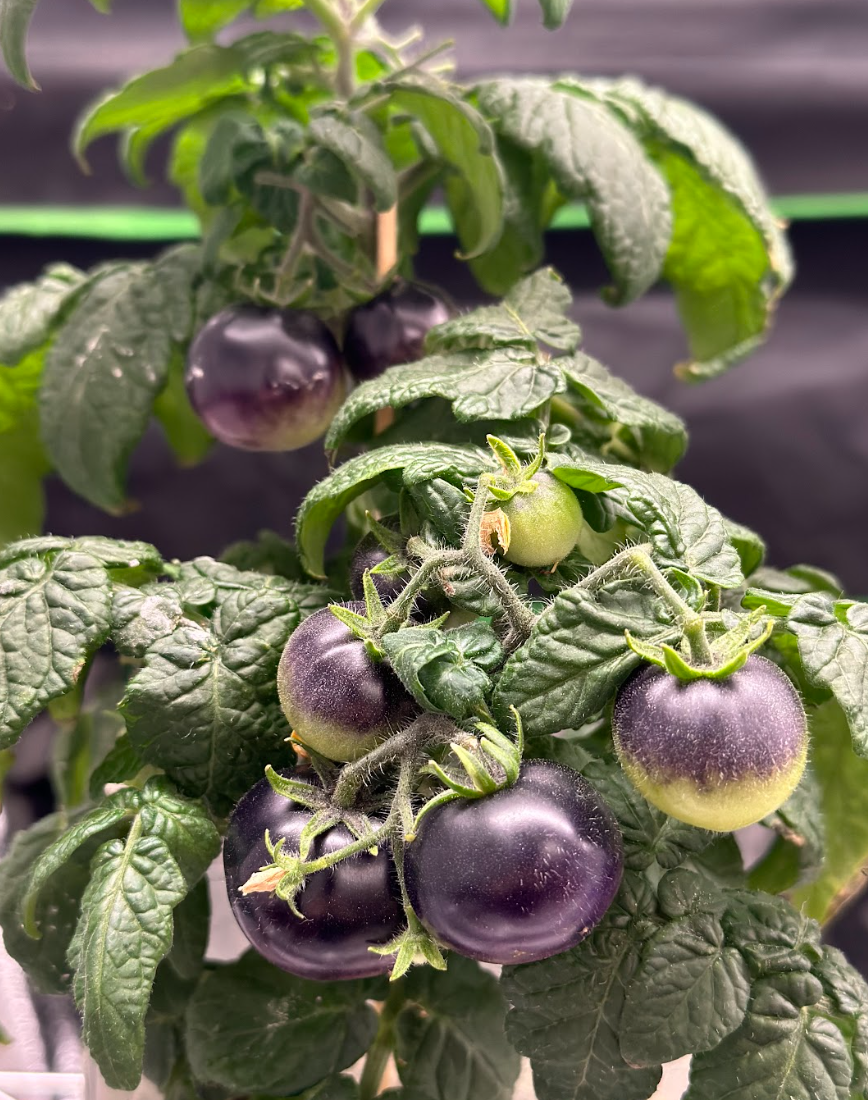
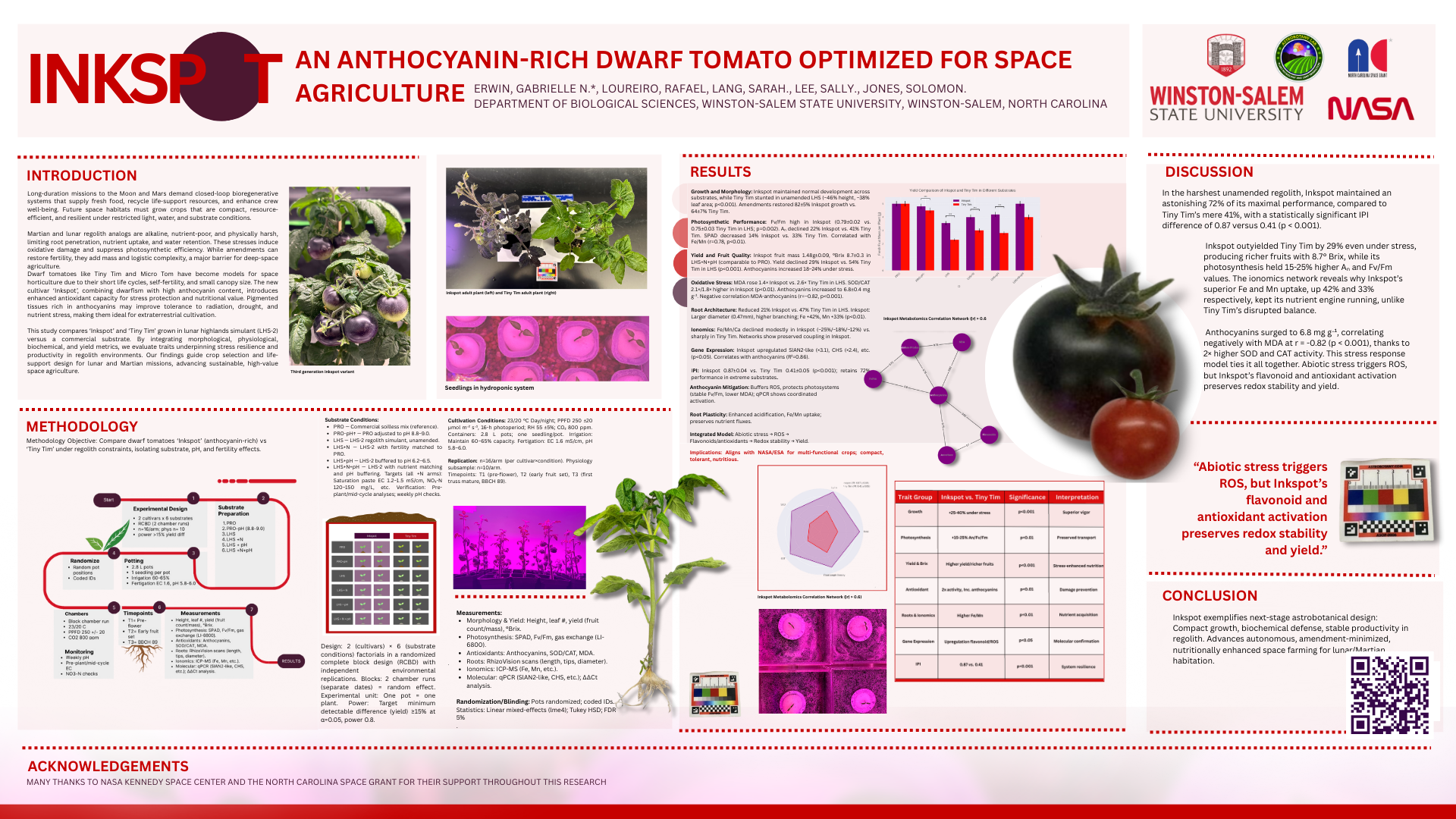
Inkspot: A stress-resilient dwarf tomato variant for off-world cultivation
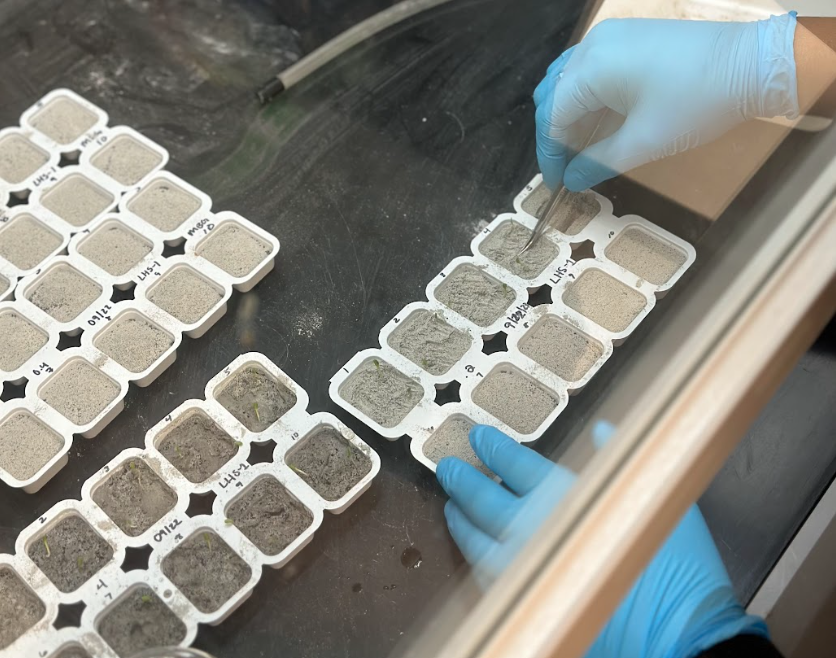
LHS-1 Lunar Regolith Analog Assessment
Posters
Gabrielle investigates how plants and biomaterials respond to extreme environments, with applications in regenerative medicine and long-duration spaceflight. Her work examines molecular signaling, directed evolution, and tissue-engineered systems that aim to not only better understand, but also support human health beyond Earth.
Gabrielle investigates how plants and biomaterials respond to extreme environments, with applications in regenerative medicine and long-duration spaceflight. Her work examines molecular signaling, directed evolution, and tissue-engineered systems that aim to not only better understand, but also support human health beyond Earth.
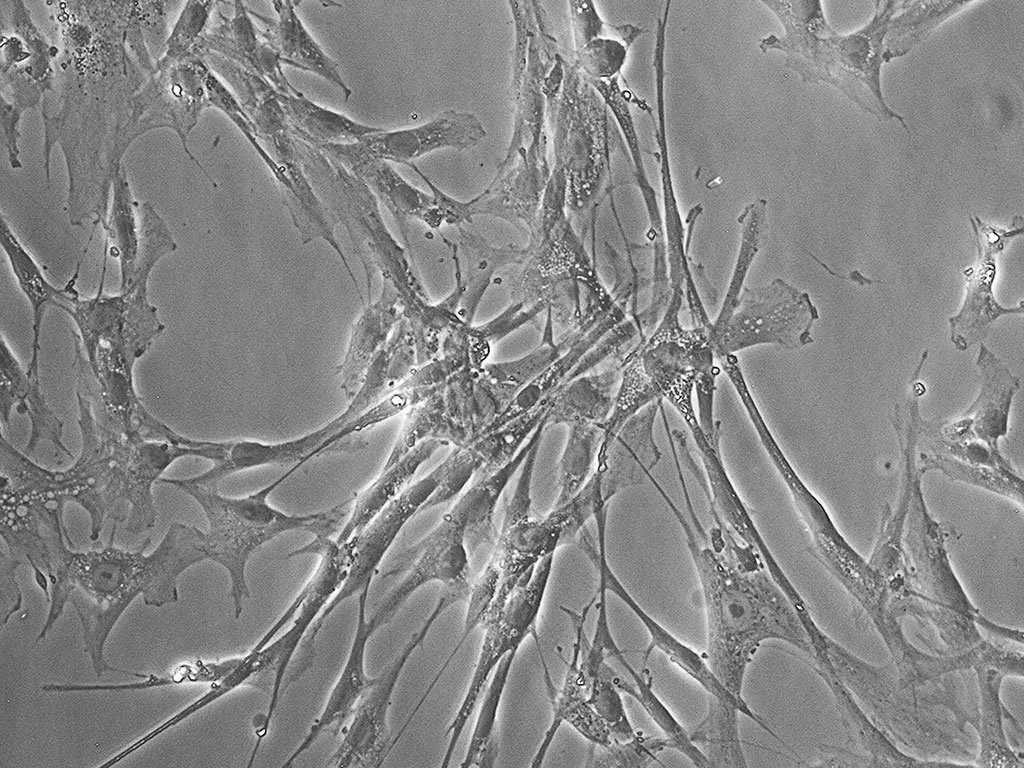
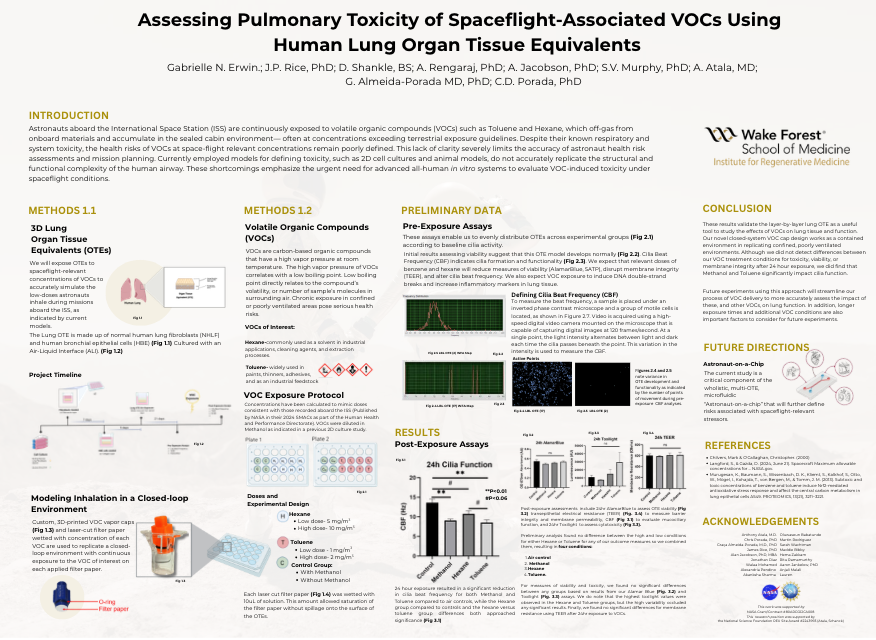
Assessing Pulmonary Toxicity of Space-flight Associated VOCs Using Lung Organ Tissue Equivalents
Featured Projects
-
Studying dwarf tomato cultivars grown in analog regolith to identify traits that enhance nutrient uptake, stress tolerance, and productivity under extraterrestrial constraints.
Goal: Develop plant lines suitable for sustained off-world agriculture
Methods: RCBD experiments, pH/fertility manipulation, physiological assays
Collaboration: Astrobotany Lab, Winston-Salem State University
-
Exploring organoid and organ-on-a-chip models to understand how microgravity, space radiation, and space-related volatile organic compounds influence tissue repair and behavior.
Aim: Understand the impact of spaceflight-relevant stressors on astronaut health and inform regenerative strategies for astronauts and extreme-medicine applications on Earth.
Methods: Organoid culture, TEER, fluorescent microscopy, biomaterial scaffolds
Collaboration: Porada Lab, Wake Forest Institute for Regenerative Medicine
-
New Shepard (NS-31) Seedling Flight Preparation and analysis of crop plant seedlings flown aboard Blue Origin’s NS-31, assessing early growth responses to microgravity and radiation in suborbital flight.
Collaboration: Brazil’s EMBRAPA, Astrobotany Lab WSSU
Publications
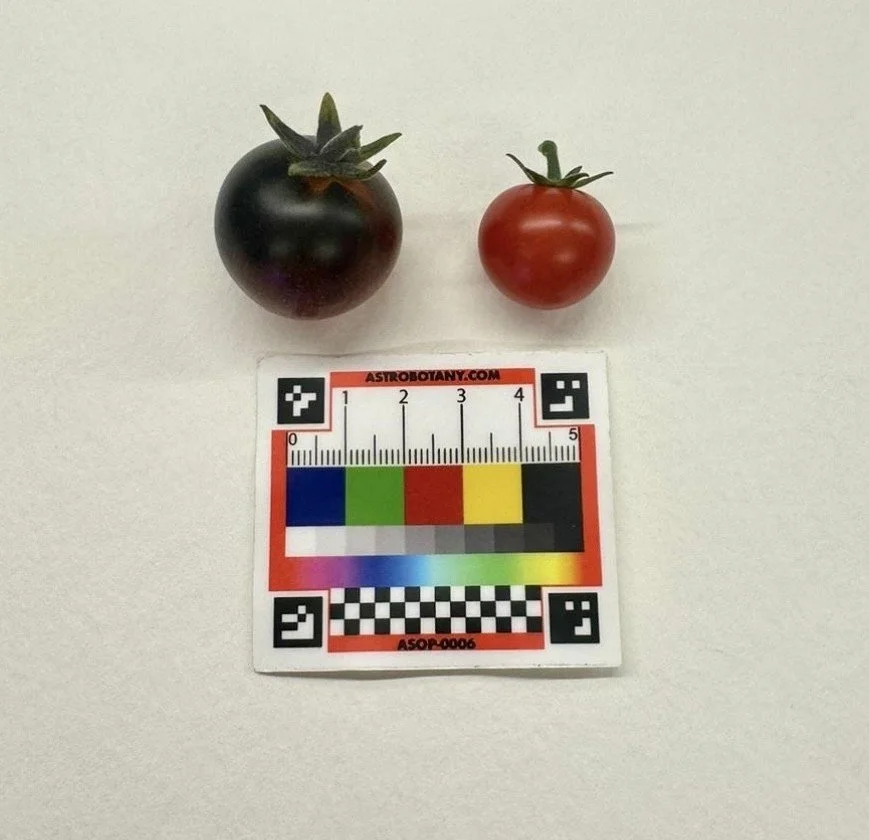
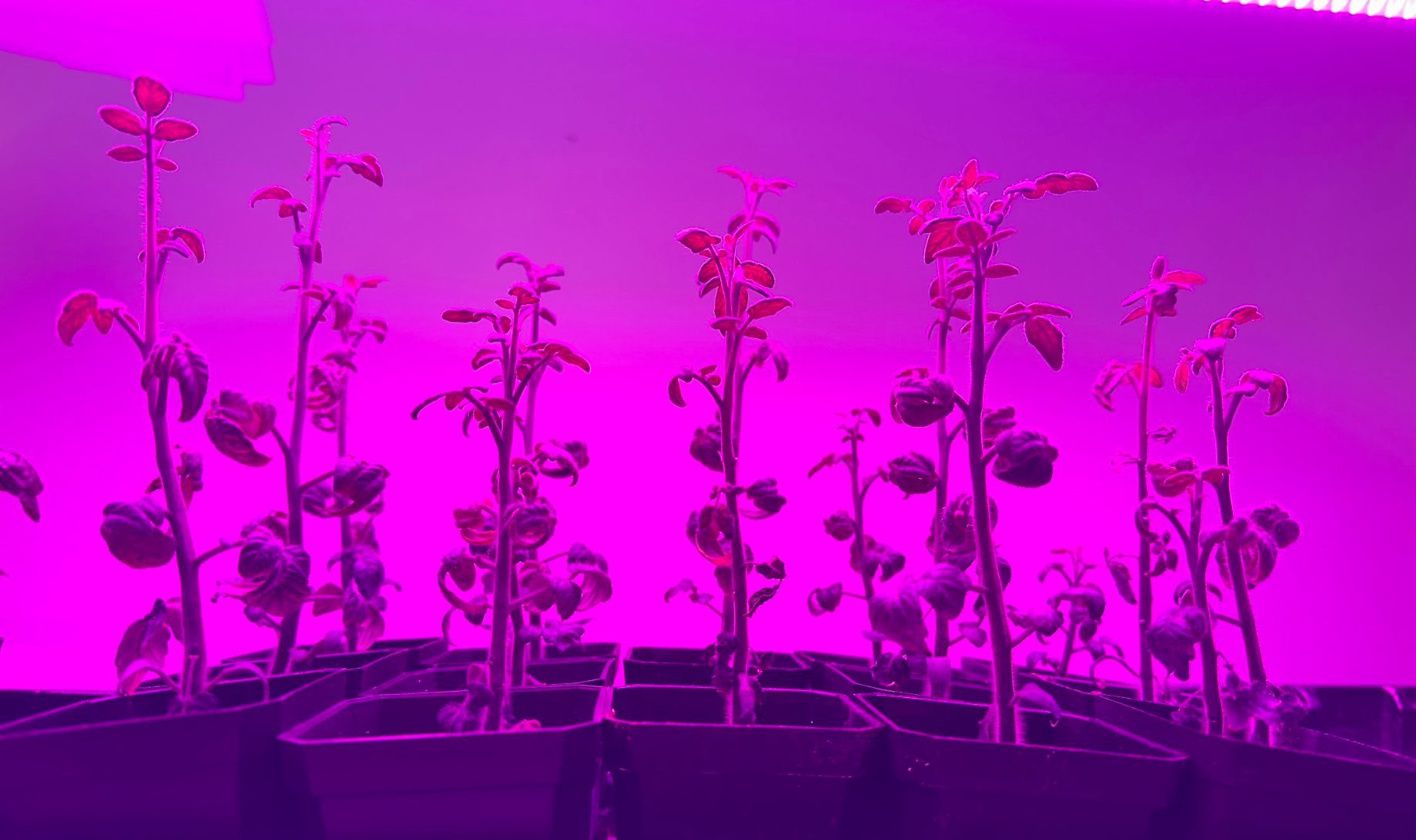
Inkspot: A stress-resilient, anthocyanin rich, dwarf tomato variant for off-world cultivation
As humanity prepares for sustained off-world habitation, the development of regolith-based agriculture (RBA) is essential for achieving self-sufficiency in space crop production. However, lunar regolith's alkaline pH, poor water retention, and high metal content pose severe physiological and biochemical challenges to plant growth. This study evaluates the performance of Solanum lycopersicum 'Inkspot', a stress-adaptive, anthocyanin-rich tomato variant, in comparison to its progenitor 'Tiny Tim', under control and simulated lunar regolith (LHS-2) conditions. A randomized complete block design was used to assess germination dynamics, morphology, fruit quality, antioxidant activity, and root architecture across 80 replicates over 65 days in controlled chambers. Inkspot maintained high germination rates (85% in regolith) with low variation (CV = 14%) and showed only moderate reductions in height and biomass, while Tiny Tim suffered a 45% biomass reduction and 60% fruit yield loss. Inkspot fruits increased anthocyanin content 2.5-fold in regolith, functioning as a stress-response mechanism and potential bioindicator.
Physiological assessments revealed greater retention of chlorophyll, Fv/Fm efficiency, and stomatal conductance in Inkspot, correlated with higher SOD and CAT enzyme activity and lower lipid peroxidation. Root imaging showed Inkspot developed a significantly larger, more complex root system, while Tiny Tim's roots contracted under stress. These findings highlight Inkspot's abiotic stress tolerance and potential as a candidate for closed-loop life support and in-situ resource utilization strategies in RBA systems.
Plant Trek: Genesis Bed— Early-Stage Pioneer Species Assessment for Regolith Bio-activation. Gravitational and Space Research
IN PROGRESS.

Curriculum Vitae
Gabrielle N. Erwin
-
West Orange High School, 2012-2016
Winter Garden, FL
Winston-Salem State University
Bachelor’s of Science in Biology
Winston-Salem, NC
Cornell University 2015, 2016
Architecture, Art, and Planning (AAP)
Ithaca, NY
-
Student Researcher and Lab Coordinator 2024-Present
Astrobotany Lab, Department of Biological Sciences, WSSU, Winston-Salem, NC
Undergraduate Interest Group Chair 2024-Present
American Society for Horticultural Science
NSF REU Scholar 2025
Wake Forest Institute for Regenerative Medicine (WFIRM)
NASA’s ‘Ask an Astrobiologist’ Production Assistant 2025- Present Blue Marble Space Institute
-
National Merit Commended Scholar, 2016
West Orange High School, Winter Garden, FL
Dean’s List, 2024-Present
Winston-Salem State University, Winston-Salem, NC
NASA NC Space Grant 2024-25
MSI STEM Pathways Scholarship
International Research Contributions, 2025
EMBRAPA and Blue Origin NS-31
-
American Society for Horticultural Science (ASHS)
American Society for Gravitational and Space Research (ASGSR)
American Society for Women in Science (AWIS)
Beta Beta Beta (Tri Beta)
-
Directed evolution and seedling stress response in suborbital flight-flown seedlings and seeds (NS-31) to inform closed loop life support agriculture.
Volatile organic compound dynamics in lung organ tissue equivalent (OTE) engineered models.
Regolith substrate optimization for early plant development and resilience.
-
Lang S, Buckner A, Jones S,Erwin G, Lee S, Loureiro R (2025) Inkspot: A stress-resilient, anthocyanin rich, dwarf tomato variant for off-world cultivation. Published May 22, 2025.
Loureiro R, Erwin G (2025). Plant Trek: Genesis Bed- Early-Stage Pioneer Species Assessment for Regolith Bioactivation. Gravitational and Space Research. In preparation.
-
Erwin G.N., et al. “Impact of Spaceflight-relevant stressors on Astronaut health using Lung OTEs,’ Poster and Rapid-fire presentation, National Institute of Diabetes and Digestive and Kidney Diseases (NIDDK) Research Symposium, June 2025.
Erwin G.N., et al. “Impact of Spaceflight-relevant stressors on Astronaut health using Lung OTEs,’ Poster and Oral Presentation, Wake Forest Institute for Regenerative Medicine (WFIRM) Research Day, June 2025.
Erwin G.N., et al. ‘Impact of Spaceflight-relevant stressors on Astronaut health using Lung OTEs’, Poster, American Society for Gravitational and Space Research (ASGSR), December 2025.
Erwin G.N., et al. ‘Inkspot: A stress-resilient, anthocyanin rich, dwarf tomato variant for off-world cultivation,’ Poster, American Society for Gravitational and Space Research (ASGSR), December 2025.
-
Technology, U. a. I. (2025, April 16). HBCU’s astrobotany lab made history this week. USBE and Information Technology. https://www.blackengineer.com/news-2/hbcu-s-astrobotany-lab-made-history-this-week/
Three WSSU students to witness historic all-female Blue Origin space launch featuring their research - Winston-Salem State University. (n.d.). https://www.wssu.edu/about/news/articles/2025/04/three-wssu-students-to-witness-historic-all-female-blue-origin-space-launch-featuring-their-research.html
Television: Local television coverage (WFMV; WXII) on WSSU Astrobotany Lab Blue Origin plant experiment, April 2025
Featured Coverage
-
![]()
"A student-led research experiment from the Astrobotany Lab launched into space."
This research is part of an ongoing project at WSSU’s Astrobotany lab, which aims to better understand how space conditions impact plant life, exploring how plants grow and behave beyond Earth’s atmosphere. Read more
-
![]()
Introducing the WFIRM 2025 Summer Scholars
Gabrielle N. Erwin is an aspiring researcher and creative entrepreneur currently pursuing opportunities at the intersection of innovation, plant science, and medicine.
-
![]()
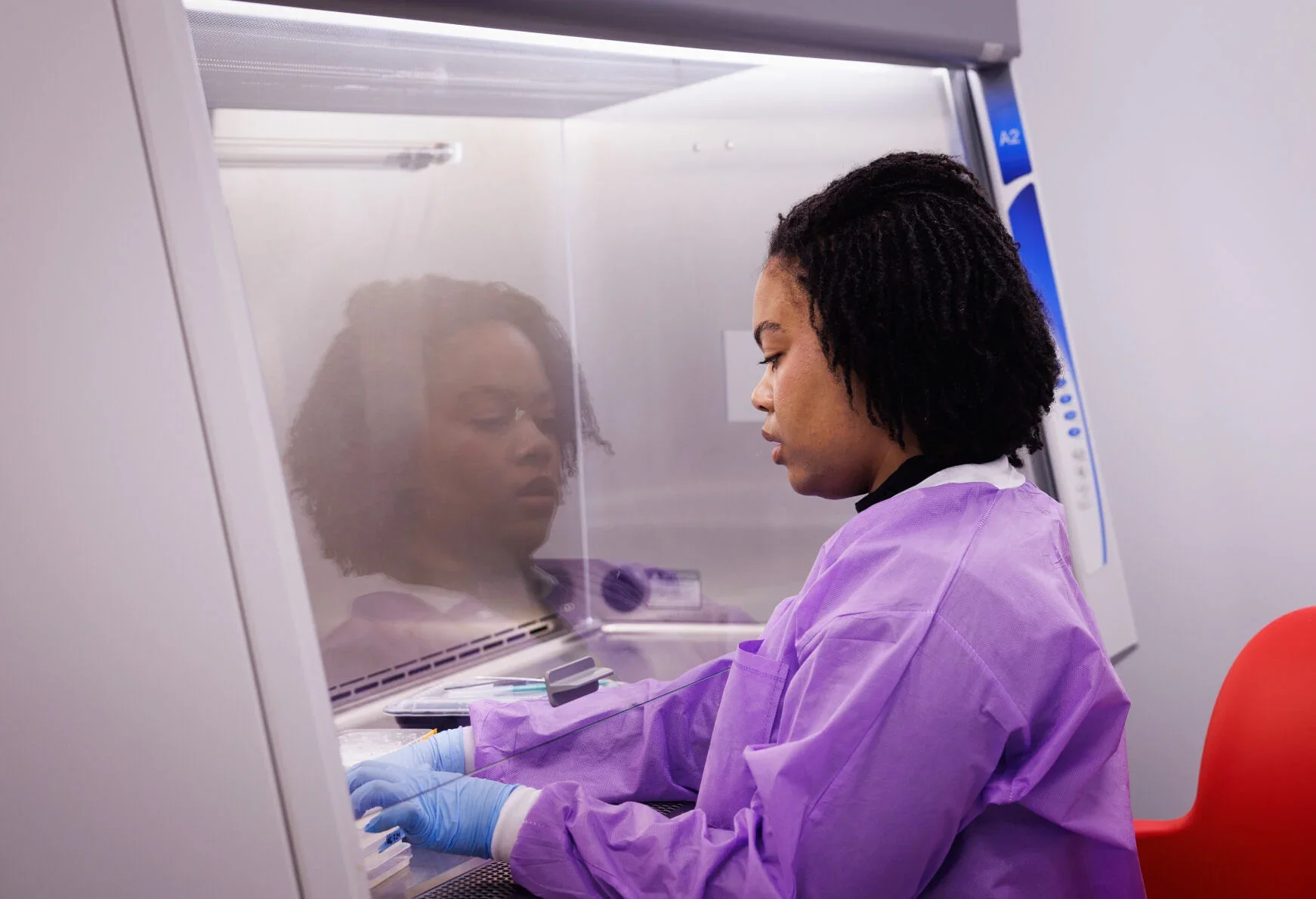
"...Gabrielle N. Erwin works under a flow hood to prevent contamination while inoculating germinated seeds into growth media."
On Monday, March 31, 2025, in the Sciences Building on campus in Winston-Salem, N.C. Plant samples from the lab will be on board the Blue Origin all-female spaceflight when it launches on April 14.
-
![]()
Winston-Salem State University astrobotany students conducting research on plants in space for Blue Origin space flight



Media & Press
HBCU’s Astrobotany Lab made history this week.
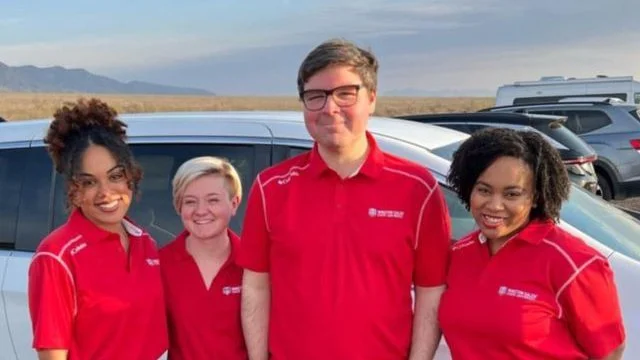
What began in a small lab at Winston-Salem State University is now reaching the edge of Earth’s atmosphere, showcasing the power of innovation and academic excellence. As the only Astrobotany Lab at a historically Black college and university (HBCU), Winston-Salem State University is at the forefront of redefining what is possible in space science and research. The initiative advances cutting-edge research, student training and mentorship, laboratory development, and future scientific discoveries.


NC Space Grant Announces 2024-2025 MSI STEM Bridge and Pathways Scholars